
The US government has removed a regulation proposed by former president Donald Trump's administration that sought to narrow the definition of "specialty occupation" under the H-1B visa regime. The change comes as a relief for Indian information technology firms, which are among the largest users of such visas. "The Department of Homeland Security (DHS) has formally vacated a regulation that would have redefined the H-1B specialty occupation, restricted off site placement of H-1B employees, and otherwise increased employer compliance obligations. "The vacatur follows a federal court ruling that set aside the regulation because the agency did not have good cause to bypass notice and comment rulemaking, in violation of the Administrative Procedures Act," explained immigration law firm Fragomen.

Based on industry estimates, telecom companies, including Bharti Airtel, Reliance Jio, Vodafone Idea and BSNL, are expected to invest over $10 billion on buying 5G telecom equipment in the next five years as they transition from non-standalone networks to standalone 5G networks.

The Telecom Regulatory Authority of India (Trai) has directed the Cellular Operators Association of India (COAI) to make a presentation detailing the pros and cons of the controversial Indian 5G standard, also known as 5Gi, which the government has been pushing for. The move comes after serious differences emerged among telcos with regard to the technology's efficacy and implementation.

With scrutiny that comes with a public listing, Deepinder Goyal's leadership could face its sternest test yet.
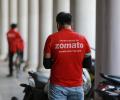
Zomato said it has consistently gained market share over the last four years to become the category leader in the food delivery space in India in terms of gross order value from October 1, 2020 to March 31, 2021.

To be able to manage any such uptick, Indian IT services players are hiring more locals, and relying on hybrid work models.

Home ministry asks IT ministry to order social media platforms to remove around 100 posts or URLs.

Amid oxygen shortage and a faltering health system in the country, India is seeing over 300,000 cases daily.

Infosys, Facebook, Genpact, and Cognizant, among others, have reached out to employees and offered support in different ways as the second wave of Covid cases sees an exponential rise. Companies are asking employees to stay indoors and prioritise the health and safety of their families. This is of significance as several information technology firms were going to take a call on work-from-home from June and had plans to allow some employees to come back to work.

Domino's India data that included sensitive customer information such as their names, phone numbers, and credit card details has allegedly been breached and put on sale on the dark web. According to tweets by Israel-based Co-Founder and Chief Technology Officer of cybercrime intelligence firm Hudson Rock, Alon Gal, the data is worth 13 terabytes (TB). He tweeted on Sunday that the data includes as many as 180 million order details, including 1 million credit card details. The data, said Gal, was up for sale on the dark web. The threat actor, he said, was asking for $550,000 for the data.


The promoter-brothers, distant cousins to IndiGo's Rahul Bhatia, are eyeing Air India's ground handling subsidiary to augment their aviation services business even as they make a big play in EVs.

The car was expected to have a price tag of Rs 10 lakh and launch was slated for this June.

The content eligible for review includes posts, status updates, photos, videos, comments, and shares.

Known for its phones and emerging from nowhere in the segment, it might take on the scooter Goliaths.

'Revival is happening slowly.' 'But that is, if the pandemic is controlled.'

In a communication to the empowered committee on PLI recently, the Indian Cellular & Electronics Association (ICEA) has stated that except one player (Samsung), all the other eight players (which include vendors of Apple Inc) selected under the scheme were facing numerous challenges in fulfilling the qualification criteria.

If the data breach is found to be genuine, and if the company is found guilty on the grounds of dereliction of duty, or misleading the general public and the RBI about the data breach, actions taken against it will be severe, the person quoted above said.

Many people posted screenshots of the alleged MobiKwik user data, which, according to sources, was up for sale for 1.5 bitcoin or about $86,000.

As a tech services company, Ola has never been in hardcore manufacturing. And unlike in ride hailing, which is a two-player market (Uber is the only other competitor), in two-wheelers it faces many entrenched players. But most of all, rivals say Ola's targets are out of sync with most, even ambitious, projections.
